Skip to content
Most people still call every electronic sorting machine in our industry a “𝐜𝐨𝐥𝐨𝐮𝐫 𝐬𝐨𝐫𝐭𝐞𝐫.”
It sounds harmless, but it’s actually a misunderstanding that limits how people think about performance.
A colour sorter uses RGB cameras to separate products based on surface colour differences.
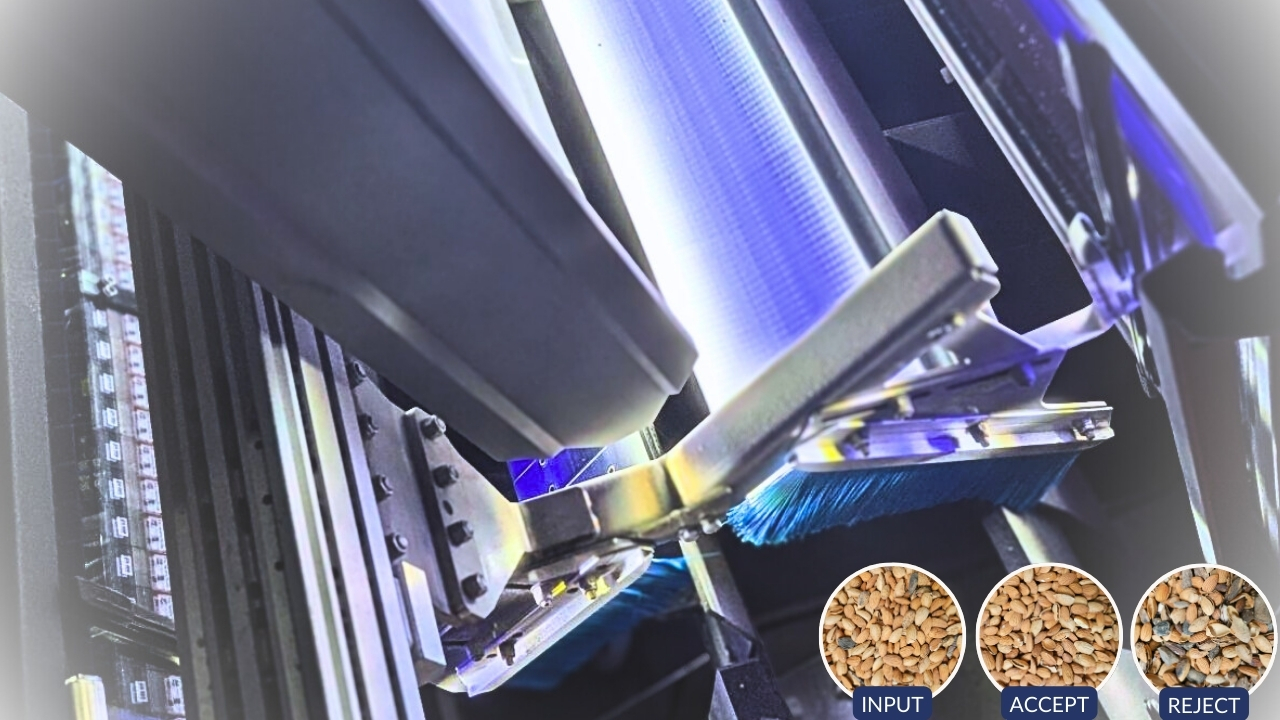
An optical sorter does far more.
Today’s machines combine:
• 𝐜𝐨𝐥𝐨𝐮𝐫
• 𝐢𝐧𝐟𝐫𝐚𝐫𝐞𝐝
• 𝐬𝐡𝐚𝐩𝐞 𝐚𝐧𝐚𝐥𝐲𝐬𝐢𝐬
• 𝐭𝐞𝐱𝐭𝐮𝐫𝐞 𝐦𝐚𝐩𝐩𝐢𝐧𝐠
• 𝐝𝐞𝐟𝐞𝐜𝐭 𝐩𝐫𝐨𝐟𝐢𝐥𝐢𝐧𝐠
• 𝐦𝐮𝐥𝐭𝐢-𝐬𝐩𝐞𝐜𝐭𝐫𝐮𝐦 𝐝𝐞𝐭𝐞𝐜𝐭𝐢𝐨𝐧
This means an optical sorter isn’t just looking at colour; it’s detecting behaviour, structure, density differences, and subtle traits that the human eye would never catch.
The difference matters.
A colour sorter can reject something that “𝐥𝐨𝐨𝐤𝐬 𝐰𝐫𝐨𝐧𝐠.”
An optical sorter can reject something wrong, even when it looks the same.
As the technology evolves, the gap continues to grow.
Recognising that difference is crucial to developing systems that are more sustainable, flexible, and resilient over time.